FAUVISM
(Started: 1899)
(Ended: 1908)
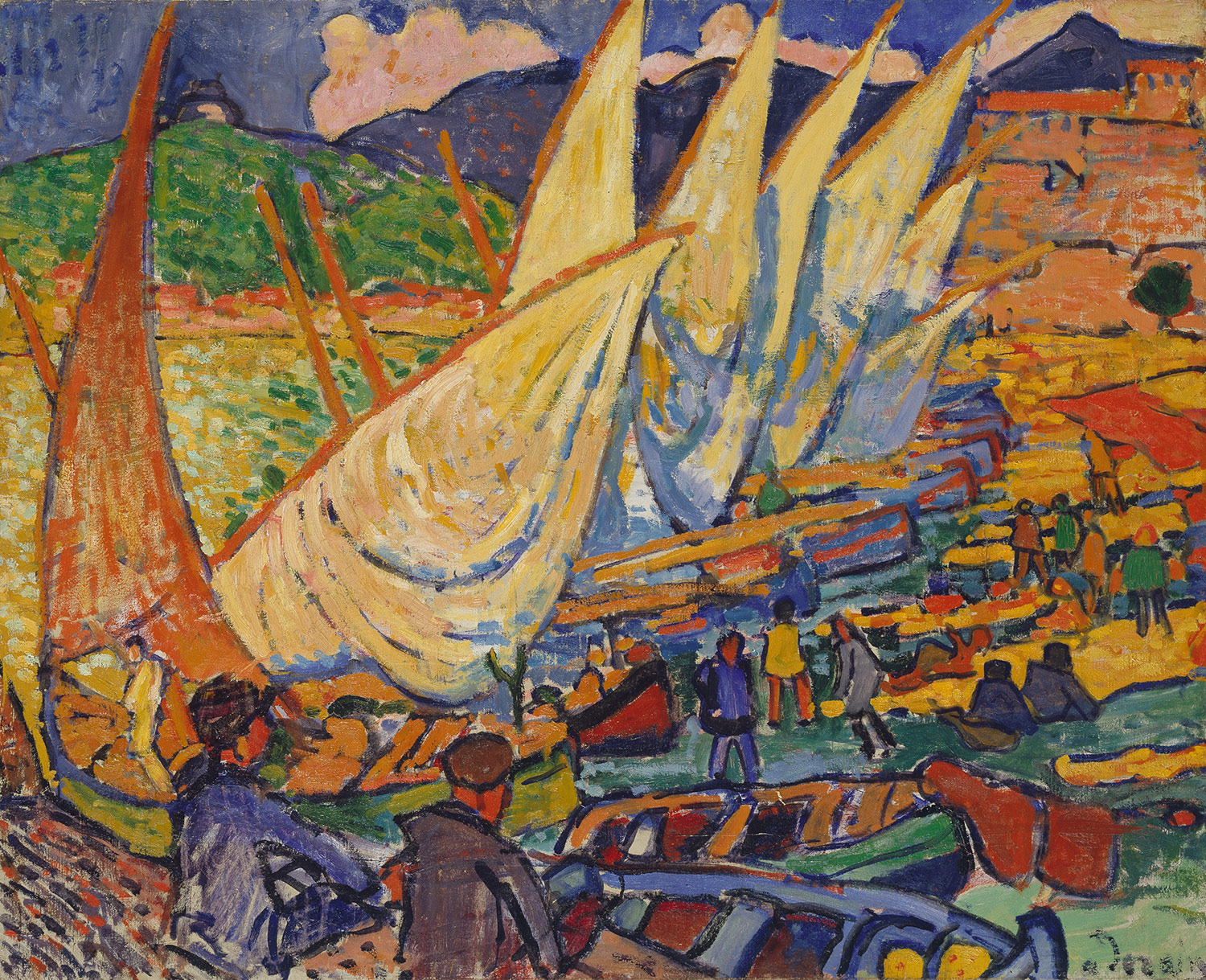
Fauvism
was the first modernist art movement developed in twentieth century in Paris.
Inspired by Van Gogh and Gauguin, they were a group of artists sharing similar
approaches to nature and interests. Like Impressionist painters, they also
preferred traditional subjects such as landscapes, or bourgeois leisure, and
while depicting their emotions on to the canvas, they utilized strong, bold
colors with thick brushstrokes. Instead of mixing colors to gain new color
tones, with reference to their name which means “wild beasts”, they applied the
pure, intense colors directly from the tube to the canvas. Fauvists never
restricted themselves with the exact colors of subjects, so the sky could be
pink, a tree could be orange, or a human face could be green in their
paintings. Their works were perceived as brightly patterned surfaces since they
did not go into details.
The
Fauvist painters were mainly:

·
Henri
Matisse
·
André
Derain
·
Maurice
de Vlaminck
·
Georges
Braque
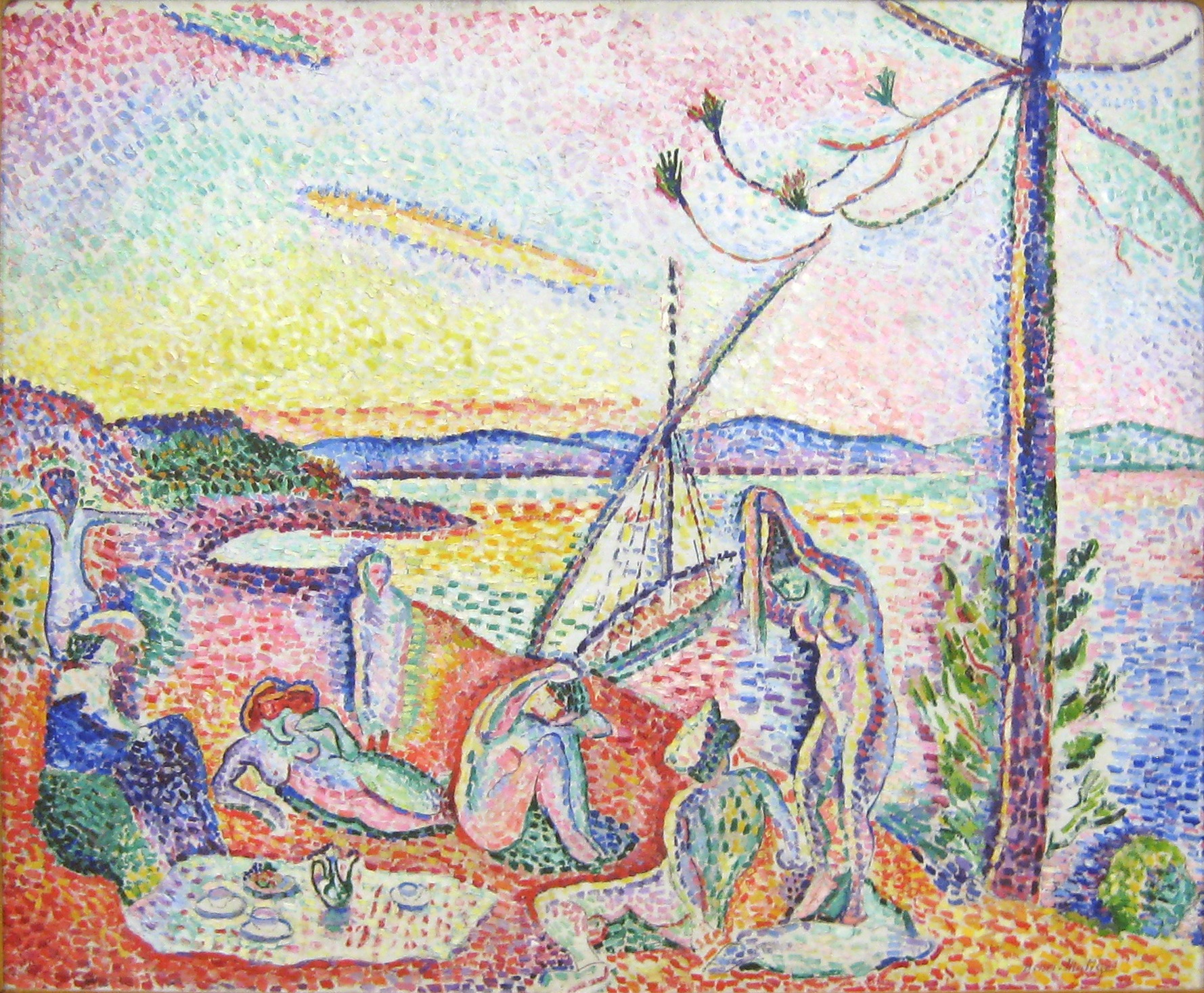
Henri Matisse

He was the leader of
the Fauves and is known to be the greatest colorist of twentieth century. After
experimenting with Post-Impressionist and Neo-Impressionist styles in where
three dimensional space was depicted, he searched for a new style characterized
by the movement of colors. The effects of arts from other cultures are seen in
his art that conveyed the quality of decoration in Modern Art; like flatness of
Japanese pieces, or decorative features of Islamic Art. The human figure was
primary for his art both in painting and sculpture. He reflected the figure’s
character and state of mind in some of his pieces, and in some of them he used
the figure as a tool to express his own emotions.
Sources:
http://arteest.org/fauvism-in-art.htm
http://www.metmuseum.org/toah/hd/fauv/hd_fauv.htm
http://www.theartstory.org/movement-fauvism.htm#
Isms: Understanding Art by Stephen Little
DIE
BRÜCKE
(Founded: 1905)

Die
Brücke is an art group formed by German Expressionist artists and founded in
Dresden, Germany. The name of the group, the bridge, emphasized their aim which
was to create the bridge between the perfect, old German art and the new,
better futuristic art. Die Brücke artists believed that their true feelings
were restricted by the society that they were living with. Hence, in order to
express their emotions freely, they chose a bohemian lifestyle and isolated
themselves from the society. Their expressionism focused on investigating
German personality and traditions for the purpose of reviving German art. Die
Brücke artists, who were impressed by art forms of Africa and Oceania, used
colors like the Fauves to express their emotions, and were interested in
primitivism again like the Fauves.
The
main members of the groups were:

·
Ernst Ludwig Kirchner
·
Karl Schmidt-Rottluff
·
Erich Heckel
·
Fritz Bleyl
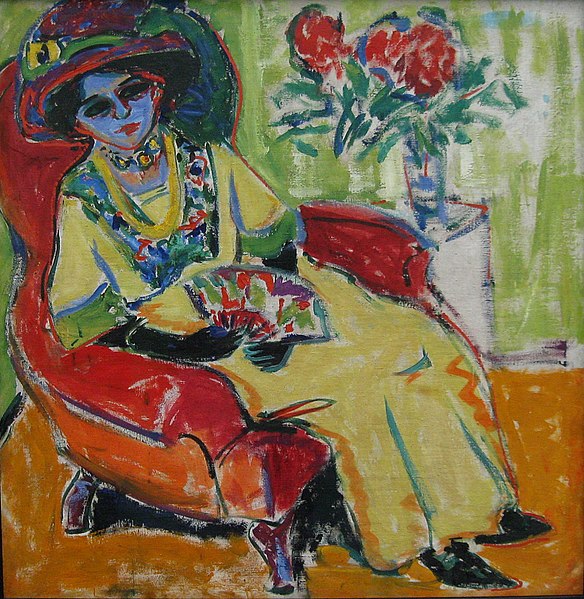
Ernst Ludwig
Kirchner
The German artist is known as one of
the most skilled and influential one among all German Expressionists. He had
inconsistent manners to the past and the present. On one hand, he revived a
traditional artistic form which is woodcut printing; yet, on the other hand he
refused academic styles and was impressed by the modern city. Human figure was
essential in his art, and he depicted the figures mostly in action since he
believed that the liveliness and the energy of the human body were best
reflected in this way. He was also interested in and inspired by Primitive Art
that guided him to a more simplified treatment of form.
Sources:
Isms: Understanding Art by Stephen Little

No comments:
Post a Comment