DADA
(Started: 1916)
(Ended: 1924)
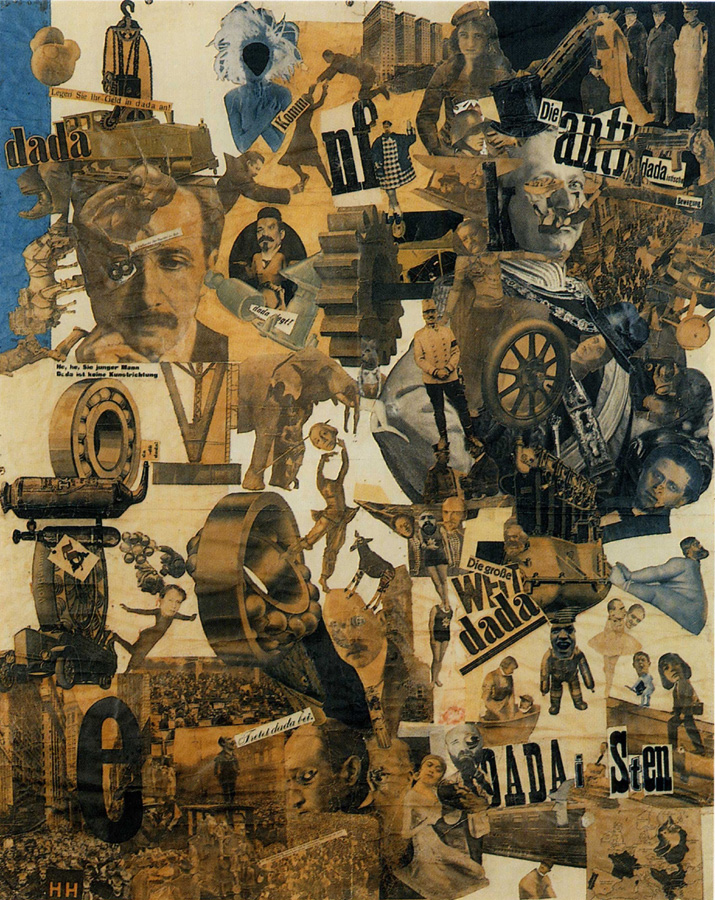
Dadaism was an artistic and literary
movement emerged during the World War I, in Zurich, Switzerland. The word
“dada”, which means “hobby-horse” in French, was taken arbitrarily from a
dictionary. Dadaist artists declared that all ethical, political, and aesthetic
beliefs were ruined during the war. They supported a destructive, disrespectful,
and liberating approach to art. Shocking was the basic tactic of Dadaists who
hoped for society to leave the nationalism and materialism that caused the war
and massacre. It was a literary movement as well as a visual one. Coincidence
and senselessness was the main elements of the movement. A new conscious was
defined with respect to the role of the subconscious in daily life and it
objected developing an entire art theory that would be condemned to die in an
art library.
Key
artists:
·
Jean
(Hans) Arp
·
Francis
Picabia
·
Marcel
Duchamp
·
Man
Ray
·
André
Breton
Francis Picabia

Francis Picabia was one of the main
figures in the Dada movement both in Paris and
New York. He was known for a rich variety of work ranging from strange,
comic-erotic images of machine parts, to text-based paintings that foreshadow
aspects of Conceptual art. Even after Dada had
been supplanted by other styles, the French painter and writer went on to explore
a diverse and almost incoherent mix of styles. He shifted easily between
abstraction and figuration at a time when artists clung steadfastly to one
approach, and his gleeful disregard for the conventions of modern art
encouraged some remarkable innovations even later in his career, from the
layered Transparencies series of the 1920s, to the kitsch, erotic nudes of the
early 1940s. Picabia remains revered by contemporary painters as one of the
century's most intriguing and inscrutable artists.
Sources:
Isms: Understanding Art by Stephen Little
http://www.theartstory.org/movement-dada.htm
http://www.theartstory.org/artist-picabia-francis.htm
http://www.huntfor.com/arthistory/C20th/dadaism.htm

No comments:
Post a Comment